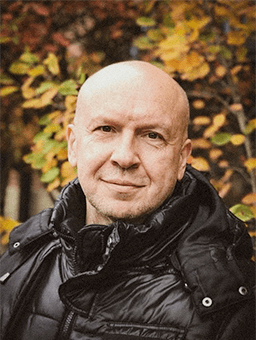
- I’ve seen your recent TV interview with Vladimir Legoida. You described yourself as a person who always moves forward, but at different speeds. What’s your speed at the moment?
- I believe, it’s moderate.
- Have you been forced to hit the brakes or was it your own choice?
- Each age has its own speed. When you are young, you never stop hurrying. You seek to reach your goals as fast as possible. As you grow and mature, you begin to control yourself so as not to hastily overlook something very important and crucial in life. So, self-control comes in handy!
- When did you become aware of that?
- Really aware? When I turned thirty-five. I started looking back on the past. Up to that moment, I had lacked any real understanding of what I was doing and where I was going and why. In other words, I was making great plans for the distant future. From where I am today they look funny and naïve.
- It seems unlikely that you’ve dreamed of becoming a government minister since childhood?
- That’s correct. I never dreamed of becoming one. I wished to see the world and meet interesting people. All these plans of mine began to quickly materialize. As a student at the choir conductors department of the Moscow State Institute of Culture I traveled a lot about the country with folklore expeditions and met wonderful old people - our babushkas and dedushkas. The things I learned and heard then were very important for me at a certain stage.
- Though you prefer moderate speeds, we’ve been moving too fast to miss the stop called Bugulma.
- Yes, that’s the place where I was born. We moved to Moscow when I was still three years old. My memories of Bugulma are few and fragmented. It was there that I learned to read. My granddad taught me. He spoke several foreign languages. At a certain point, he even tried to study Hindi. In his younger years, he was an active participant in Russia’s revolutionary events. Back then, he served in the army in Turkestan, chasing the Basmachi – anti-Soviet rebels…
On the way to the pre-school childcare center, my granddad used to point to shop signs or Soviet banners and posters on the streets and asked me to read them. I was a fast learner. My recollections of this are vague, but my parents swear that all this happened precisely this way.
My earliest memories go back to the age of six.
- In other words, the moment you started going to school?

- I started going to school when I was five and a half. My sister Irina, who is four years my junior, got sick quite often so our mother had her hands full looking after both of us, so I was sent to school early to stay out of the way. Our home was at the junction of Moscow’s outermost circular highway MKAD and Kashirskoye Shosse. For many years, my father worked at the main research center of what is now Gazprom. In 1964, we were given an apartment in a nearby community of gas industry employees, and my mother still lives there.
My school was not special in any way, not an elite establishment by any means, but we had great teachers. Many of them are still alive. I remember all of them and I really love them.
- How did you manage to get your high school degree just short of your 15th birthday?
- First of all, as I’ve already said, I started going to school early. Secondly, I skipped one year literally jumping from the third grade to the fifth. School was easy for me, but I won’t say that I really enjoyed going there. I always liked to learn something new, though. For instance, I graduated from the Diplomatic Academy when I was 47. By that time, I had already defended a doctorate in history and had obtained the title of professor along with the position of chief of the religious studies department at the Russian Presidential Academy of National Economy and Public Administration.
One day a clever plan popped into my head and I rushed to share it with my dad. I asked him, “What if I passed the exams for the next grade ahead, and then took that whole year off to spend with my grandma in Georgiyevsk?” I really liked to go and stay with her during the summer. Russia’s southern Stavropol Region with its warm climate would be good for my health. Just as my sister Irina, I often suffered from sore throats until I had a tonsillectomy. My father liked the idea. He went to the local school supervisory board and got their approval. So, I was then tested in all subjects mandatory for fourth-graders. I had prepped myself for the tests well enough and passed them all.
However, my cunning scheme instantly came crashing down. Instead of enjoying a year-long vacation, I was sent to the fifth grade!
- Did this ‘injustice’ hurt your feelings?
- I joined a class where I met wonderful boys and girls and I’ve never regretted this twist of fate. We made great friends and still keep in touch. Over the past five years, we’ve meet every three months. It’s turned into a great tradition.
I was a good student and scored only good or excellent marks in almost all subjects. Physics was the only one I found difficult to cope with somehow at a satisfactory level. It was not my cup of tea, I must confess.
- Was it your decision to apply to the Institute of Culture right after graduation?
- No. Quite a few 14-15-year-olds have the right to choose. Perhaps, there are very many of them, but that was not my case. My father, whom I adored and respected immeasurably, made the decision. We might have arguments and discussions about various things, of course, but he had the final say, as a rule.
You may remember that getting a second university degree during Soviet times was extremely difficult, in fact practically impossible. Some extraordinary circumstances were required. My father ruled that first, I had to become a choir conductor and then, when I got my head together, I would be able to decide what to do next in my life. My father had a mathematician’s mind and he knew very well that it was highly unlikely that I would remain a music teacher for the rest of my life.
I don’t feel an iota of regret that I applied to the Institute of Culture. There I met excellent teachers and made new friends… As I’ve already said, I regularly meet with my former classmates. The same happened to my fellow students at the institute. We, eight people from our group, have been friends for 43 years. Forty-three! A whole lifetime.
- Your father was a scientist, right?

- Not only was my father good with theories, he also was equally skillful when it came to practical matters. He worked in the oil and gas industry, making calculations crucial to the development of Siberian oil and gas fields. His first job as a post-graduate student was in what today is Tatarstan’s oil company Tatneft. Then he was transferred from Bugulma to Moscow.
My dad passed away in January. He was advanced in years – 86. It was a colossal loss for everybody who knew him. And for me, of course…
- Your profession of a historian – was it your father’s choice?
- No, when I made this decision, I had to use my head. It would be rather hard for me to explain logically what exactly attracted me to it. To make the long story short, I was a student at the evening department of a teachers’ training institute and at the same time taught history to high school students in Moscow. In 1985, I obtained my university degree and applied for a post-graduate course at the Institute of History within the USSR Academy of Sciences. My intention was to join Viktor Danilov’s group. The choice was quite conscious. He was a great authority on Russian village history. Back at the institute, I took an interest in the subject of the famine in the Soviet Union during the early 1930s, which remained largely obscure. In the end, though, I began to conduct research under the guidance of Georgy Kumanyov, a specialist on the history of the Great Patriotic War. He was my mentor.
Life guided me along a different path. I am certain that nothing is accidental. Everything was predetermined by my guardian angel. This is how I focused on the place of the Russian Orthodox Church in the policy of the Soviet state in 1943-1948. I spent 26 years on the subject and it was the happiest time in my life.
- Then? Not now?
- Our dialogue today is open and honest, without any omissions and understatements, isn’t it? Then I should say without false modesty that I have something to be proud of professionally. To begin with, it’s the collection entitled The Russian Orthodox Church. The 20th Century. Everything may be forgotten, but this book published in 2009 will live on. It was a colossal piece of work. I delved into a totally unfamiliar subject nobody had ever probed into before. Also, doing research within the Academy of Sciences is a pursuit that has no equals in terms of the joy and the feeling of self-realization you get. I spent 16 years in archives to collect unique material. I’ve had no time to summarize it yet, though. It is to be hoped that someday I will pass it on to my own post-graduate students…
In 1991, Yaroslav Shchapov invited me into the Center of the History of Religion and Church he had founded, where I moved up the entire ladder from junior research fellow to the center’s chief.
And in 2002 I embarked on a teaching career.
I can say that I have some dreams that have not been accomplished yet. I would like to write about Metropolitan Nikodim (Rotov). My previous attempt was unsuccessful. I failed to accomplish what I’d originally planned. I did publish a book called The Russian Orthodox Church and the Second Vatican Council, but that’s not what I had originally hoped to achieve. I was literally drowning in the collected material. The essence remained unidentified. I hope that my second approach to this subject will be more successful.
- Do you keep writing?
- There was a time when I published eight or nine articles a year. But I’ve written nothing since the moment I became a government minister. For several reasons. My tight schedule is one. Secondly, a researcher’s work requires a special state of mind. I’ve not lost the desire to write …
- Was it easy to move to a civil service job?
- It was sheer chance.
- But as you say nothing in life happens without a reason?
- And still… In 2010, the process of merging academies began. The old-time scholars I’d worked side by side began to quit and then to leave this world. I reacted painfully to this. I felt that a great injustice was being committed. My inner motivation was gradually waning. I began to lose interest in work. Back then, the Russian government’s department of culture opened the position of a deputy director in charge of the nationalities and religious polices. I was invited to take it. For six months, I remained hesitant, wondering if I should accept or decline the offer. In February 2012, I eventually agreed.
In the autumn of the same year, the presidential staff created a department for public projects. At the beginning of 2013, I was transferred there to serve as deputy chief.

The slightly less than four years have been a wonderful time. The job I was doing was familiar and clear. In a sense, it was somehow linked to what I had been doing before. In-depth analysis in the field of education with a certain emphasis on culture, literature and the arts. I liked everything.
- When was the prospect of a government minister’s position mentioned for the first time?
- In 2016. I hoped that the actual appointment would follow not so soon and that I would have more time to get ready, I mean to brace myself psychologically, above all. However, as you may understand, the decision was made regardless of the way I felt back then. There was a job that had to be done. All doubts had to be brushed aside.
Let me say once again. Everything in life is predetermined. This means that all previous events lead up to this scenario. I’d worked at school, conducted research, then did teaching again, tried my hand at being a manager… Apparently, all those were stepping stones leading to the definitive challenge. I heeded the challenge and accepted it. In such situations, many people may walk on by without getting the message addressed to them.
- You’ve become the first woman ever to head the ministry of education… Incidentally, how old is your ministry?
- It was established in 1803. I can’t see anything surprising in the fact all of my predecessors were men. You should remember what a woman’s role in the past was. My advice to you is to read books by Professor Lyubov Denisova on this subject…
But believe me, gender was the last thing on my mind when I took over.
- Have your colleagues ever made you feel like crying?
- Do I look like a crybaby? I’ve never been one. It’s hard to make me cry, unless I take the liberty myself. That’s a joke. Seriously, I seldom well up with tears in my eyes. This may happen in a moment of despair, when it’s impossible to change anything.
- In August 2016, you agreed to lead the Ministry of Education and Science only to see in May 2018 a large share of powers and quite a few subordinates taken away. Science and education are now the realm of responsibility for a separate agency. The federal service for the supervision of education and science, Rosobrnadzor, is no longer answerable to you. It reports straight to the head of the Cabinet.
- I believe it was the right decision to make. The industry is too large and complex to put everything into one basket.
Let’s take a look at our recent history. In the Soviet Union there were three governing bodies – the Ministry of Higher and Secondary Special Education, the State Committee for Science and Technology and the Education Ministry.
How should one go about the business of moving in three directions simultaneously? True, science is connected with education and schools are linked with universities, but there are too many nuances that do not make it possible to streamline these fields of activity into one standard.
The separation that was carried out was absolutely logical. This isn’t a rift. The way I see it, school education is the decisive component of this triad. It is like a tree trunk with branches stretching in all directions.
- The redundant ones have been trimmed.
- Let’s go through it one more time. The institutions of higher learning and the science control function are gone. Instead, an excellent opportunity has emerged to focus on the problems of schools, each and every one of the 42,000 that exist in Russia. As you may know, 20 pilot regions are now testing a new teacher attestation model, which is an important component of the national system for teacher advancement. The purpose is clear. President Vladimir Putin formulated it in his May decree: to ensure the global competitiveness of Russian education and to propel our country to the top ten world powers in terms of education quality.
Our primary school education is already number one in the world, based on what international experts have said. They used several criteria, such as the quality of reading, information searching skills, information interpretation and generalization, text analysis and ability to formulate conclusions… As far as reading skills in primary schools are concerned, everything is OK. A real slump occurs in the fifth and sixth grades. As for high school students, they do not read at all. The situation has to be corrected. A teacher attestation model is being introduced as a helpful instrument.
By 2020, it will become mandatory for all.
- But for the time being you’ve lost the control function. It’s gone along with the education watchdog Rosobrnadzor.
- As far as my colleagues and I are concerned, what is most important is that the ministry is empowered to determine the education policy. We govern our relations with the regions on our own.
It is a totally different matter that a couple of years before I joined the Ministry of Science and Education the department responsible for general education had delegated the function of drawing up the Unified State Examinations to Rosobrnadzor. Which was very wrong, I believe. I see a glaring contradiction here. An agency responsible for supervision cannot be allowed to generate the tests.
I am firmly against this arrangement, and I believe that we will be able to identify a sensible solution that will enable experts at both agencies to work in tandem.
- Did you have to make considerable changes to current plans in the wake of the reorganization that followed?
- I can only say that I breathed a sigh of relief. Now I know very well what I am responsible for and what I am supposed to do.
- Isn’t this precisely the slowdown we discussed in the first minutes of our interview?
- God forbid! It makes no sense to discuss what there was and no longer exists. You should always draw on the considerations of expediency and use the available functions, and do it well.
When I joined the ministry in 2016, I spent more than a year looking into school education problems, trying to sort things out. As for college and university education, I’ve managed only to come a little bit closer to understanding them. The same applies to science.
Now it is up to my colleagues to proceed with studying these matters, while I will take care of what I already know. I believe this is the optimal approach.
If we get back to the topic of speed, 20 years ago I would probably say: “Ok, give me the go-ahead, I will manage everything on my own.” My reasoning today is different, because I understand quite clearly that every single step entails responsibility. While you are young, you never stop to think about such things at all. You go with the flow. The sense of responsibility grows stronger as years roll on.
- Your idea of standardizing the humanities curriculum, for which the federal state education criteria will have to be changed, has been met with strong opposition. The rector of the Higher School of Economics, Yaroslav Kuzminov, is your strongest critic.
- I would not like to become personal and discuss specific individuals. I would merely recall that the commotion in the media and on social networks began when a yet-to-be formed Cabinet of Ministers was still under discussion. As you may have noticed, I ignored the attacks, although some went to great lengths to get me to join the squabble. I kept quiet not because I lacked decent counter-arguments. I told myself: once a massive attack has been launched, this means that I’ve greatly upset somebody’s schemes and that I’m on the right track.
There was another reason for not yielding to the provocation. A very personal one. At that time, my dad was dying a painful death. It was a moment when nothing else matters. On January 29, two weeks after my birthday my father passed away. I was in a state of shock. I was unable physically to waste strength on senseless battles. I thought it would be far more important to stay focused and calm.
- Do you keep a diary?
- Somehow, I knew in advance you would ask me this question…
Strictly speaking, I’ve never kept a diary as a collection of my most intimate thoughts. My dad forced me to take notes for self-discipline. I was a bit disorganized as a young woman who was interested in no end of things. There was not enough time for all my hobbies and pursuits. The task of making me take a seat at a desk and concentrate on something for a while was a really daunting one. Therefore, my father tried to organize my daily schedule somehow. Half an hour for this, and then an hour for that. As soon as you are finished, you can feel free. Go and enjoy yourself. However, I found it really difficult to live according to a strict schedule. My dad needed my diary more than I did. In that way, it was easier for him to control his daughter and to call her to order, if need be.
Whenever I got carried away with some new idea, I could easily forget about everything else. I’m not a perfectionist, but it is important for me to see life around brim with activity and everybody around be well settled and taken care of and happy.
In a word, I’ve never kept diaries in the traditional sense, which now I greatly regret. I would’ve been able to leaf through and recall…
- Recall who or what?
- Certain people that mattered a lot in my life. Sadly, they aren’t here anymore. I would not like to stir up memories. It’s too personal…
- And still, once you remarked you had been betrayed twice in your life, but never explained what it was all about.
- It’s usually friends or close relatives who betray someone. My female friends let me down twice. It happened with a ten-year interval.
No, those were not love affairs. I always smile and say we like different types of men…
It was about making the right decision. In both cases it seemed to me that my friend was about to cross a red line that I regarded as crucial. In my opinion, it was very wrong to step over it. In both cases, I spent a long time cautioning my friends against taking that last step. However, they would not listen. I can’t help. It was their choice. At that moment, our paths parted. Our contacts were disrupted and will never resume.
- Broken forever?
- I’ve got over it. And recovered. The burn has healed.
How should I explain it to make it clear? I have a very keen feeling of social justice. It is a strength and weakness at the same time. You find it far harder to go on living when you cannot keep quiet about and tolerate injustice even in relation to people you don’t know. I’ve never made other people feel hurt for the sake of my own benefit or convenience. I’ve never done anything like that and I will never do, because a greater part of my life is already in the past. I don’t live at somebody else’s expense. My father taught me to never forget this steadfast rule. He taught me to judge myself the right way. I know well what I am and am not capable of. Therefore, I don’t waste energy and emotion on attempts to achieve the unachievable. It’s better to dedicate oneself to what is realistic.
In everyday life, I am a very modest person. I don’t care about expensive cars and luxury brands. I won’t ever pay the slightest attention to them. I’ve long learned the rule it makes sense to spend money on education, health and rest and leisure. It is far better to travel in the company of good friends than buy an expensive item. We’ve done rafting and mountain climbing, under tough outdoor conditions. No luxuries. What do I need them for? We got into cars and off we went. We’ve traveled by car around all of Europe and we’ve seen very many places in Russia.
- For how long have you been driving?
- I got my license 15 years ago. At a certain point, I felt I do not want to depend on somebody who would agree to give me a lift or take me for a ride. I went to a driving school without telling anybody at home. Nobody would’ve believed I would succeed anyway. My dad had thought that a car and his daughter were incompatible. When I passed the driving tests, everybody at home was dumbfounded. I feel quite confident on the road, but I haven’t mastered parallel parking to this day. That’s beyond my power.
- Are you a roadhog?
- By no means! Haven’t I explained my attitude to speed already?
I believe that being on friendly terms with me is easy, too. I used to have very many friends, and in my younger days, I was fond of singing, dancing and having a good laugh. Time flies, though, and I’ve had to hold my horses. The range of people I keep in touch has grown smaller. But that group of eight school and college friends remains the same. No dropouts.
In our company, we believe that a real friend is not just one who will extend a helping hand in need, but who will certainly feel glad about other people’s success. You will agree that the latter quality is much rarer. I’ve been able to see for myself more than once that my friends are utterly indifferent about the position I take. Our relations rely on something very different. They still call me the nicknames they used 30 or 40 years ago. That’s the way it should be.
I try to never take offense without a reason. This advice from my father is very helpful in life.
As I’ve grown older, I’ve learned to forgive. It’s a difficult science, but I try to learn it, too. I’ve developed a protective reaction against insults. However, those two acts of betrayal remain unforgiven. They were too serious.
- Possibly, some people may have similar grievances against you, too?
- It is true, there are certain things for which I should ask to be forgiven, but it is hardly possible those I hurt in the past will agree to let bygones be bygones. Fortunately, such people are not many.
I’m doing my best to be self-critical and never try to look better than I am. I will always respond to other people’s pain, misfortune and injustice committed towards anybody. I hate boorishness, familiarity and dishonesty.
- Can you be rude?
- In the past few months, I’ve noticed that I can lose self-control. I can be firm, I can make others toe the line, without yelling. A whispered word is sometimes far more effective.
- Can you recall what made you lose temper lately?
- It’s been a hectic year. It began with my dad’s death. Then the media attacks concerning my job followed. I was somewhat anxious over the uncertainty regarding the makeup of the new government and the ministry’s new range of functions…

- You mention your father quite often. Would it be right to call you daddy’s girl?
- Without a doubt. He made me what I am today. The same fully applies to my junior sister. Irina graduated from the Moscow Art Theater School, in Oleg Yefremov’s group. She refrained from making a career as an actress. First, she taught the art of scenic speech and then ventured into philology. Currently, she works on humanitarian projects to support Russian language programs abroad.
My dad lived long enough to see his grandchildren and great grandchildren. In the meantime, you should remember that our mother was the domestic engineer who was always totally responsible for our family’s logistics. She laid all the groundwork to let my dad dedicate himself entirely to his job and indulge in creative endeavors. My parents lived together for 61 years.
Amazingly, my sister and I and even the grandchildren have always feared what if something happens to our dad and granddad? We’ve never had such an acute feeling about our mom. She was always seen as something unshakable. Like a stone wall. A mountain. Our mother has always been, is and will always be. So everything is all right.
Now a brief story that perfectly illustrates our mother’s character. Do you remember the summer of 2010 in Moscow? Six weeks of scorching heat, not a drop of rain and thick smoke from forest and peat fires… Everybody felt like running away as far as possible. Our mother’s train of thought was different. In the garden next to our summer home in the countryside, she was cultivating cherry tomatoes. The plants had to be urgently watered. On August 10, when the smog was at its worst, we went to our dacha. The smoke was so thick you could not see anything beyond 50 meters. My parents stayed in the car while I ventured out for an in-site inspection. I returned pretty soon with this verdict: “You go there only wearing a gas mask. Or else you may suffocate in no time.” In reply, I heard this: “So put it on and go ahead!” What do you think? I took the gas mask that I’d kept since the day we had an emergency fire exercise at work and went to the garden to water the tomatoes! I suspect that for any curious onlooker it was a surrealistic picture to see! A lonely female figure in thick haze with a gas mask on her face and a watering can in her hands. Fortunately, there was nobody near to see the spectacle.
What I’m trying to say is different. It’s never occurred to me that my mother’s request can be ignored. Once a decision is made, it has to be done. This was just like, when we were still little girls. Our mother took Irina and I to classical music concerts twice a month. Nobody asked if we wished to go or not; it was just get up and go.
Now, I’ll wrap up the August 2010 story. The cherry tomatoes survived and our mother even harvested the crop in defiance of my counter-arguments about smog effects and carcinogens, although she was a chemist by education and profession.
Of course, my mother’s strength has been waning since our father’s death, she’s lost weight, but still she manages to carry on. I’ve borrowed many traits from my father, including some suspiciousness and caution, but at the same time my mother and I have much in common – from appearance to character. She is 82 now, and I wish her good health and longevity.
- And in what way did you bring up your own daughter?

- First, I told myself I’d never do certain things the way my mother did. I’d never scold or punish Vera. Quite often, I was not allowed to go out and I was put in the corner. I quickly forgot what exactly I’d done wrong, but I kept standing there, reluctant to apologize and ask for forgiveness. My mother sometimes used ‘belt discipline,’ while my father preferred other methods of persuasion, although one day he taught me a very different lesson I will always remember…
I guess I was six then. I came home from school and said right away I would never befriend one of the girls in my class. My dad inquired why. Being the straightforward person as I am, I replied that girl’s mother was our school’s janitor. Before I could finish the phrase, I found myself at the other end of the room, shocked and dumbfounded. It was the first and the last slap on the cheek I ever got from my father. He never punished Irina or me, but this time he failed to hold back his anger… The message was more than clear, but my dad decided to make sure I learned that lesson well enough. He told me to sit down and started explaining to me, a six-year-old, the real beauty and value of human relations. He told me nobody ever deserved to be humiliated because of one’s status and place in society. I don’t know if I understood well enough then what he was telling me, but as you can see, I still remember it. I soaked it up like a sponge.
As a mother, I used different methods of education and upbringing. But in the end in Vera’s case it all turned out not the way I had anticipated. Persuasion and examples from my own experience did not generate any positive effects. In communicating with a teenager this does not work. My daughter did listen to what she was being told, but preferred to act her own way.
She is a historian by education. Her job is in the field of the humanities. Vera was always good at drawing and painting. At an early age, when she was nine, Vera applied to an art school, but upon graduation, she abandoned this pursuit for a variety of reasons…
- Did you change your phone number when you became minister?
- No, I didn’t. It’s remained the same since 1993. I haven’t cut off ties with anyone and I haven’t been hiding from anyone. I still keep in touch with the people I knew all the way. The circle has grown far greater, though.
My dad, for instance, was greatly upset when he learned about my appointment. He was well aware I would be unable to reconcile research and administrative duties. About a month later, he phoned me and said with a little laugh: “I’d never imagined, honey, how many acquaintances would recall my existence following your promotion to minister!”
- Have you learned how to say NO to people?
- Sometimes it is more useful to say NO than YES. I’m quite certain about that.
It’s far better to encourage, to create incentives than provide prop-ups that would merely serve as disincentives. The same applies to charity. I’m a historian and I like to look back on the facts from the past. After the end of the Great Northern War, Emperor Peter the Great ordered a sweeping audit across Russia. He had all beggars and the disabled counted. It turned out that those who really needed support and protection were relatively few – about 5,500. All others merely used beggars’ disguise to ask for alms. Peter the Great had all such types removed from almshouses. Crippled soldiers who had no relatives took their places.
Assistance must be targeted. I have several people I lead through life, but I will not discuss that in public, it would be inappropriate.
- How did you shape the goals you are going to achieve in your ministry?
- I painstakingly try to avoid idle talk and empty promises. It is common knowledge that problems in the industry I’ve been commissioned to run are many. My task is to reduce them. That says it all.
It is most important to make the school the main stage of education, which it had always been.
- Do you think it is not so today?
- Adverse changes began at the end of the 1980s. They came as an immediate effect of the situation in the country.
Just recall your own younger days. Parents would let their kids go out to play outdoors quite calmly, feeling no fear. Each youngster was free to join a hobby or sports club according to taste. The Soviet system of education was ruined but no alternative created instead. Now we are trying to compensate for the backlog.
One of the side effects of the current situation is today’s teenagers tend to be more infantile than teens 30 years ago. Quite often young people become independent and mature much later and many surveys have confirmed this. I closely monitor their results.
Today’s young people try to delay the moment when they begin to make decisions. They find it more comfortable to live off their parents’ support and to place responsibilities on them. I’m not being critical, I’m merely stating hard facts.
- This makes me recall that famous line by Alexander Pushkin: “We all have studied, if a little, Some blurry thing in some vague ways…” Has anything fundamentally changed since his times?
- It goes without saying! Today’s situation is very different.
On the one hand, I should say, that we are in a different historical setting, while the human being of today and of two centuries ago is basically the same. We all weep, laugh, rejoice, get upset, fall in love and feel disappointed.
But it’s undeniable that over the past decades the pace of the civilization’s development (here comes our favorite topic of speed again!) has grown noticeably and the amount of information being received has skyrocketed. Therefore, it’s essential not to lose our breath, but to retain our stamina till the end of the marathon and not drown in the flood of information pouring in from all sides.
I can’t stand all this talk that graduates are expected to have a set of ‘competences.’ To my mind, the criteria should be different. Each individual is to be taught to think, understand, feel and be responsible for one’s actions. A school’s main mission is to encourage its graduates to move onward, to develop and to learn new things. That is the strongest incentive of all!
And, of course, it is crucial to raise the status of teachers in society. For many decades, three professions invariably remained among the most respected ones: the doctor, the teacher and the priest. The basis of everything!
- But the current system as it is, teachers are becoming pedantic and dogmatic, if you don’t mind my saying so, now their job is not so much to teach children, but to keep filling reports to their superiors and memorize orders and instructions they get from on high.
- The concept of education as a service must be dropped. We’ve been gradually moving away from it (I can hardly take the credit for this, because it’s the people’s wish). Culture and medicine are not services, either. Some extra courses may be provided on a commercial basis, but this is a different topic. Education is a resource that allows for shaping a full-fledged and independent personality over a period of 11 years.
The teacher’s job is a mission, a noble cause. These people are what makes the future before our very eyes.
- Sounds beautiful…
- It does, and it is important to fill these words with correct content. Russia’s teaching corps these days is getting noticeably younger, although 45-47-year-olds still constitute its backbone. Which is good, I believe. This is the optimal age. You are already experienced and mature, on the one hand, and still strong and eager to achieve, on the other.
- I would like to touch upon a more down-to-earth matter. The Unified State Exam, which still remains a great controversy.
- I have a balanced view of this problem. The practice of such examinations and tests has a long history in the West and a very short one in our country. Nobody has ever managed in just 20 years to go the way other countries have gone over centuries. Whatever the attitude to the USE, 70 percent of those who are admitted to the universities in Russia’s two largest cities are applicants from the nation’s remote provinces. I like the 70%-to-30% percent ratio in favor of provincial applicants. What proportion would we have had if it weren’t for the USE? You’ve already guessed, I believe.
The Unified State Exam is a great incentive, a chance for those whose home is not in Moscow or St. Petersburg. If we look back on the past, we will find there a thousand confirmations that Russia has always relied on provincial resources.
True, at first, when the tests were introduced, they stunned many. The net effect was two years before graduation the teachers stopped teaching and began coaching their trainees in taking the exams the new way. Parents were hiring private tutors, high school students opted for external degree programs to dedicate themselves entirely to the selected subjects, while paying no attention at all to other academic disciplines. Everything is changing now, slowly but surely. I believe we will manage to do away with the vicious system of coaching.
I can tell you what tiny detail is still missing from this mechanism. Possibly, some will disagree with me, but still. The original status of annual academic progress verification tests should be restored. Then the attitude to the USE will change and there will be no place for fears or panic.
- Have you ever been afraid of taking exams?
- Never in my life! On the contrary, I always wished to be the first so as not to waste time in front of the door waiting for my turn. Incidentally, when I started teaching myself, I occasionally gave my students higher marks for using… good cheat sheets. My own students will confirm it was really so. To make a good crib sheet you have to study the information, digest it and put the gist of it on a tiny piece of paper. Something will surely be memorized…
By the way, I was a strict lecturer. I briefed my students on the don’ts right away – don’t be late, don’t enter the room after me, don’t keep mobile phones turned on, don’t chew the gum in class… My first classes looked pretty much like a one-woman show turned reconnaissance-in-force. It was essential to not just prohibit something or enforce some requirement at any cost, but to foment interest and get the audience involved in the process of learning…
I kept delivering lectures when I already had a job at the presidential staff. Now it’s over.

I’ve no time. Though I still have the desire.
Back to the Unified State Exam. It has to be improved to become a logical ending of the teaching process which does not require extra tuition. The USE cannot be the ultimate end. It is merely a tool to rate the quality of students’ knowledge.
The opponents of the unified exam keep pressing for its cancellation. My reply is this: fine, we can do away with it tomorrow morning. What’s next? You may remember how many exams had to be taken in the Soviet era. Seven high school graduation exams and then four entrance exams at the institute or university. This nightmare is now gone.
Nobody has ever pursued the aim of making life harder for teachers, students and their parents. On the contrary, the purpose was to make it easier. True, the system is not perfect. No problem, everything will be settled.
- Incidentally, haven’t you met Ruslan Salimgareyev, the boy with a 100%-perfect score on all tests of his Unified State Exam? Isn’t he the strongest existing argument in favor of the USE?
- I haven’t met Ruslan in person yet, but I saw his interview. What a wonderful boy he is! To journalists’ questions how such a miracle became possible, he answered briefly and very clearly: “You’ve got to study well.” There’s nothing else to add.
There’ve always been young Einsteins, bright students scoring A’s, and gold medals everywhere. The USE is not as grim as it is made out to be. Ruslan proved this with his own example. I have no doubts other record holders will follow, but he will remain the trailblazer. I know that he applied to and been admitted to the biological department of the Moscow State University. A decent choice.
We’ve discussed in detail how hard it is for a teenager to decide on what to do in life. My dad made the decision for me in advising me to go to the Institute of Culture. Would I have gone there myself? Very unlikely. One day my aunt, a medical doctor, had a brief talk with me on the subject. At that moment, I was 19 and worked at a school already. My aunt asked: “What if you had gone into medicine?” I did not know what to say then, but now I sometimes think I should have become a medic…
All these what-if speculations do not matter anymore. Nothing can be changed.
Incidentally, I recall a saying I heard at about the same time, in my younger years. I was pouring out my heart in the company of a friend of mine who was twice my age. I remember I was complaining the situation looked like a dead-end to me and there was no way out. Suddenly I heard: “Remember, my dear. The final NO occurs only in the grave. At all other places there are only YESes!”
The older I got, the better I realize how very true my older friend’s remark was. Nobody cares whether you want it or not. Keep the flag flying. “Only YES!”
Sometimes, when I am feeling down, I may tell my relatives and friends I feel like giving up and doing nothing. The answer is always the same. “And for how long will you last this way? Three days at the most?” I reply: “Five days or so. Possibly, a week.”
However reserved I may look, I’m very emotional. Sometimes this caused me problems. I may turn too impulsive in some situations and say something I shouldn’t. To tell you the truth, I always know when I’ve gone too far and hurt someone in front of me. I instantly apologize. And I do so not for the sake of protocol, but sincerely.
- What’s your attitude to September 1?
- Vibrant and festive. Just as it should be.
- And how did it feel when you were a schoolgirl yourself?
- I always looked forward to meeting my friends. Quite often, though, I was unfortunate to get sick on the eve of this or some other festive occasion. Such things happened to me at least twice a year – before the New Year’s Eve party, before September 1, on the eve of my own birthday or some other event important to me.
- This September 1st falls on a Saturday. Some schools have postponed the beginning of the academic year until Monday, thus making the summer holiday last just a bit longer. Were they right?
- Knowledge Day is a tradition, a festive date, and it is to be marked in accordance with the calendar. After all, we may celebrate the New Year, say, on Thursday or Friday, without waiting for the weekend. With our birthdays, it’s the same thing.
Certain memorable events are pegged to specific dates. Moving them to some other day would not be very good. Try to put yourself in the place of the first-graders or their parents, whose September 1 has been stolen. I don’t see anything worth being commented on here. But remember, this is not the ministry’s official point of view but Olga Vasilieva’s private opinion. All schools are free to make decisions as to when the academic year should begin.
Sometimes, I am reproached for being too orthodox. In my opinion, sound conservatism is always necessary. Upbringing and education cannot be separated from our mentality…
I feel nothing but selfless joy when I think of those who started going to school this year and will leave it in 2030. I’m not a science fiction author, and I won’t dare to predict what the world will be like in 11 years from now. I do hope it will change for the better. At least, we should keep working to make this happen.
- Last year the charity fund Vera held a campaign entitled Children Instead of Flowers. Each teacher was presented with one bouquet of flowers from the whole class, while the money the parents saved in that way was donated to a fund for sick children. About 40 million rubles was collected. And it was decided to have another fundraising campaign this year.

- I don’t think it’s an either/or question. Why break the flower tradition and somehow restrict the right of children or their parents to express gratitude to the teachers? On the other hand, it’s no use turning the ceremony into “the most expensive bouquet” contest. Everybody can take a sensible approach.
Incidentally, I have my own experience with September 1 flowers. I can’t tell you what year of my career as a school teacher it was, the third or fourth. I was walking home after classes with several bouquets of flowers. An old woman teacher coming my way stopped me with this rebuke: “Next time, kiddie, keep all the flowers you get in the classroom for the boys and girls to see them on September 2 and on September 3. They presented you with flowers not for you to take them home.” I remember her words so clearly as if they were said yesterday.
Generally speaking, I have a good memory. For this, I must thank my dad, who made my sister and me memorize and then recite one new poem a day. It went on like this for quite a long time. Until I rose in revolt in my eighth year in school.
My father had a remarkable gift of persuasion. He never prohibited anything but in the process of discussion, he steered Irina and I into making the decision that he thought was right. And we changed our opinion without even noticing it. We began to share his ideas while he exerted no visible effort for achieving this…
You see, as we talk, I tend to mention my dad now and then. This merely emphasizes the place he held in my life and how strongly I miss him today…
More professional questions, please, if you still have any.
- The clerk proposes, the boss disposes. You may feel free to make any plans, but everything may change in the blink of an eye…
- I’ll tell you bluntly and without any intention to make an impression that I do not stick to my current position. Do you know what kind of nightmares I have sometimes? Not about being dismissed, but about tragedies involving children. I wake up in a cold sweat. God forbid something terrible may happen! I won’t tell you what the nightmares are so as not to invite trouble.
- Two years in the minister’s seat is not long enough to sum up any results, but some conclusions can be made already.
- In 2016, I took a leap into the unknown. I was forming my team on the fly. True, in the process of making managerial and personnel decisions some mistakes were committed, but I suspect there was no way of avoiding them altogether. You and I know too well that only the one who does nothing never makes mistakes.
My friends and old-time acquaintances often say I’m fighting a losing battle while trying to build relations within my team drawing on my subordinates’ personal qualities. They argue it is wrong, that my attitude to this task should be purely technocratic. I remain certain that in some fields of activity it is wrong to follow the pattern: the commander issues orders and the soldier does what he is told. I believe there should be a happy medium, which allows for creating a certain climate of trust between superiors and subordinates, but at the same time leaves no chance of stepping over the red line of purely business relations.
You see my attitude to my current job and status is functional and utilitarian, if you wish. I’ve never felt dizzy with the thought that I’m a government minister.
French poet Pierre-Jean Beranger, who spent some time working as a dispatch clerk at the University of Paris and who once was jailed for his satires, authored a marvelous poem, titled To my Friends who have become Ministers. I reckon it matches well today’s topic of our conversation.
I’ve no wish to be anything – no, my friends, no –
Places, titles and crosses on others bestow!
‘Twas not surely for Courts that by Heaven I was made;
Of the bird-lime of Kings, timid bird, I’m afraid.
‘Tis my mistress’s neat, rounded figure I need.
And the chat and the laugh and a snug little feed.
Just as if in my cradle the straw he had blest,
God in making me said: “In obscurity rest!”
‘Twould but bother a rhymer who lives on the past,
If her favors Dame Fortune before me should cast:
For I whisper myself – if her crumbs, e’er so few,
Are allotted to me – that they’re scarcely my due;
Or what poor artisan – toil, alas, as he may –
Better claim to these fragments that mine cannot lay!
Come, I’ll rummage my wallet, nor blush at the quest:
God in making me said, “In obscurity rest!”
It’s a long poem – six stanzas. I won’t recite them all. You can read it yourself, if you wish. I would merely say that the great Frenchmen who lived nearly 200 years ago described the way I feel today very well. I’ve never wished to take a senior post, but once it happened, I try to cope with my duties to the best of my ability.
I’m doing this here and now. I don’t look back on the past without a special need and I keep moving on, at a speed that I feel is right.